
TikTok Creative
Ad Hooks That Stop the Scroll: 30 Proven Formulas
The hook is the highest-leverage second in your ad. Here are 30 proven formulas to stop the scroll — grouped by angle, with examples you can steal.
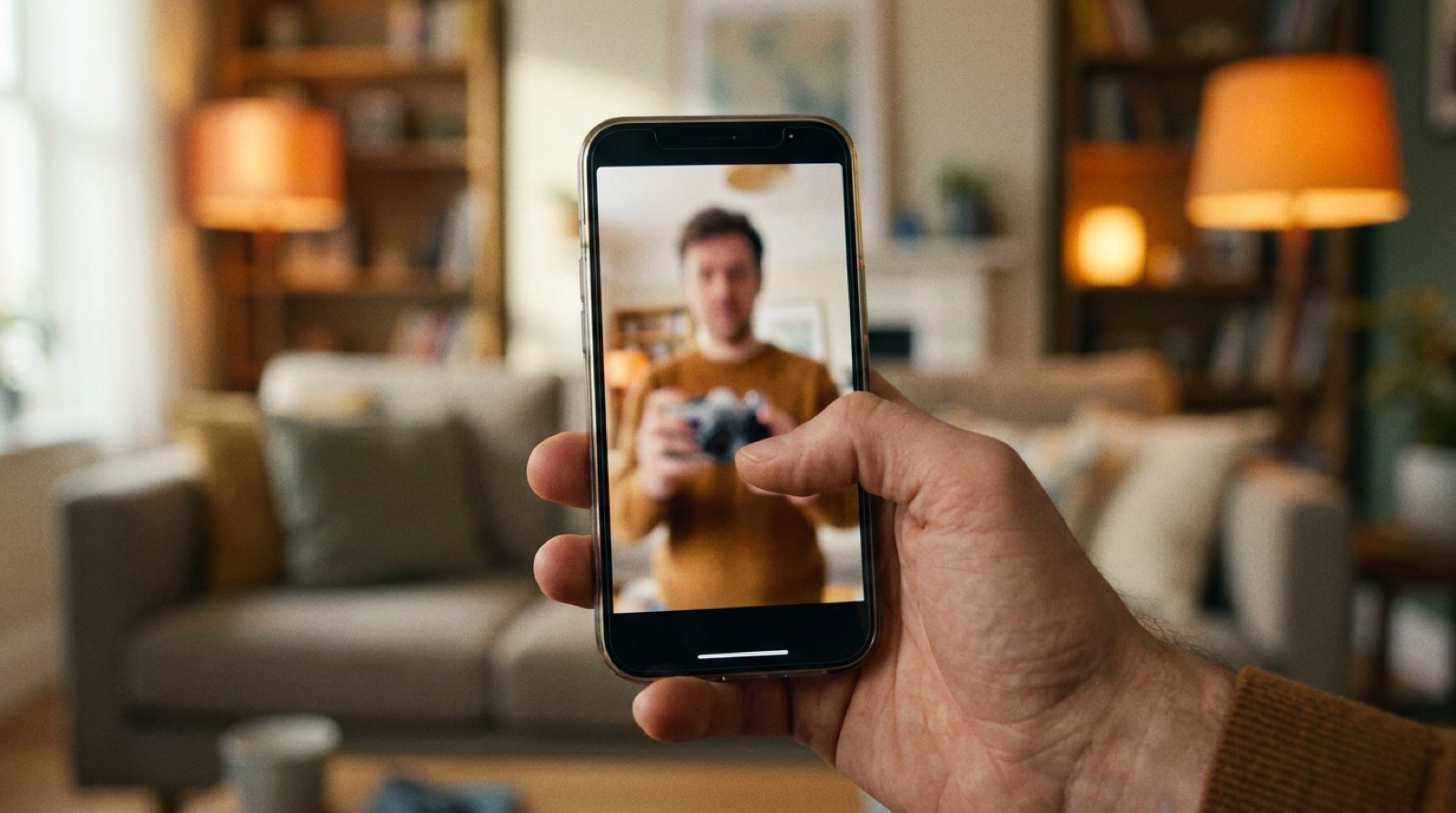
Part of How to Make TikTok Ads That Convert (UGC)
Quick answer
An ad hook is the first 1–3 seconds whose only job is to stop the scroll. The strongest hooks lead with the viewer's problem, a surprising claim, instant visual tension, or social proof — never with your logo or a slow intro. Because attention is decided almost instantly on Facebook, Instagram, and TikTok, the hook is the single highest-leverage variable in a video ad. Master a handful of repeatable formulas and you can test openings far faster than you can build new ads.
You can have a brilliant product, a generous offer, and crisp production — and still lose if the first second doesn't earn the second. The hook isn't a nice-to-have; it's the gate every other part of your ad has to pass through. This is why experienced media buyers obsess over openings: improving a hook lifts the ceiling on everything downstream.
Below are 30 hook formulas grouped by the psychological angle they pull on. Steal them, adapt them to your product, and — most importantly — test several against the same core ad.
The anatomy of a scroll-stopping hook
Quick answer
A great hook does three things at once: it interrupts the pattern visually, it creates an open loop the brain wants closed, and it signals relevance to the right viewer. The visual stops the thumb, the line creates curiosity or tension, and the framing makes the right person think "this is about me." Get all three in under three seconds and you've earned the rest of the ad.
Every formula below is just a reliable way to trigger one of those three reactions.
Problem & pain hooks
These open on the exact frustration your customer already feels.
- "If you've ever [annoying problem], stop scrolling."
- "The real reason your [outcome] isn't working."
- "You're [doing common thing] wrong — here's the fix."
- "Nobody tells you this about [topic]."
- "Still [struggling with X]? It's not your fault."
- "This [problem] cost me [specific loss] before I figured it out."
Curiosity & open-loop hooks
These open a loop the viewer has to keep watching to close.
- "I tried [thing] for 30 days. Here's what happened."
- "Watch what happens when I [action]."
- "This one change [surprising result]."
- "I wish I knew this before I [common decision]."
- "Here's what [authority] won't tell you about [topic]."
- "Wait for it…" paired with an immediate visual setup.
Bold-claim & contrarian hooks
These stake a strong, specific position that demands a reaction.
- "Stop buying [category] until you watch this."
- "[Popular belief] is a lie."
- "This replaced my entire [routine/stack]."
- "The best [product] you've never heard of."
- "I'll never go back to [old way] again."
- "Unpopular opinion: [contrarian take]."
Social proof & result hooks
These borrow credibility from numbers, reviews, or transformations.
- "Over [number] people switched to this — here's why."
- "The before and after that made me a believer."
- "Why this has [number] five-star reviews."
- "My [friend/customer] tried it so you don't have to."
- "This sold out [number] times. Now I get it."
Visual & demonstration hooks
These rely on the frame itself, not the words — perfect for UGC-style video ads.
- An unexpected first frame (a mess, a transformation mid-action, a close-up).
- The result first, then the rewind to how it happened.
- A satisfying demonstration in motion (pour, reveal, before/after).
- A hand entering frame doing something surprising.
- Extreme close-up that's hard to identify until it pulls back.
Question & callout hooks
These speak directly to a narrow audience so the right person self-selects.
- "[Audience], this one's for you."
- "What if [outcome] only took [short time]?"
- "Are you making this [common mistake]?"
How to test hooks without burning budget
Quick answer
The fastest way to improve ad performance is to test multiple hooks against the same body and offer. Keep everything after the first three seconds identical, swap only the opening, and you isolate the variable that matters most. This is cheaper and faster than building new concepts, because you're reusing proven assets and changing just the gate.
But testing ten hooks live still costs money and time. The smarter move is to score them before you spend, kill the obviously weak openings, and only put budget behind the ones that pass the bar.
Find your winning hook faster with AdRoast
Hooks reward volume — but volume without judgment is just more guessing. With AdRoast you generate image and video ads from 1,000+ presets, then we roast each one against $25B of real ad spend and flag weak hooks before launch. Pair this with our Facebook ad playbook and you've got a repeatable system: write the hook, score it, fix it, then spend.
Frequently asked questions
What is an ad hook?+
An ad hook is the first one to three seconds of a video ad — or the first line and visual of a static ad — whose only job is to stop the scroll and earn the next moment of attention. It's not the offer or the pitch; it's the pattern interrupt that makes someone pause. Strong hooks lead with tension, curiosity, a bold claim, or a relatable problem, then hand off to the body of the ad.
How long should a video ad hook be?+
Aim for the first 1–3 seconds. On platforms like TikTok, Reels, and Shorts, viewers decide whether to keep watching almost instantly, so the hook has to land before the third second. The visual and the first spoken or on-screen line should work together: the frame stops the thumb, and the line earns the next five seconds. If your hook takes longer than three seconds to make its point, it's too slow.
Why do most ad hooks fail?+
Most hooks fail because they start with the brand instead of the viewer — a logo, a slow intro, or a feature nobody asked about. They assume attention they haven't earned. The fix is to open with the viewer's problem, a surprising claim, or instant visual tension, and save the brand reveal for after you've hooked them. A weak hook caps the performance of even a great offer.
How many ad hooks should I test?+
Test the same core ad with several different hooks — five to ten is a healthy range for a new concept. The body and offer can stay the same while you swap openings. Hooks are the highest-leverage variable in a video ad, so cycling through angles (problem, curiosity, social proof, bold claim) on one proven concept usually beats building ten entirely new ads from scratch.
Can AI write ad hooks?+
Yes — AI is well suited to generating hook variations fast because hooks are short and pattern-driven. The risk is volume without judgment: more hooks just means more guessing unless you filter them. AdRoast generates ad creative and scores each one against $25B of real ad spend, flagging weak hooks before you spend, so you launch the openings with the best odds instead of testing every idea blindly.